Bryan, Haley’s Dad
Losing Contact With Your Child
“This was my baby.”
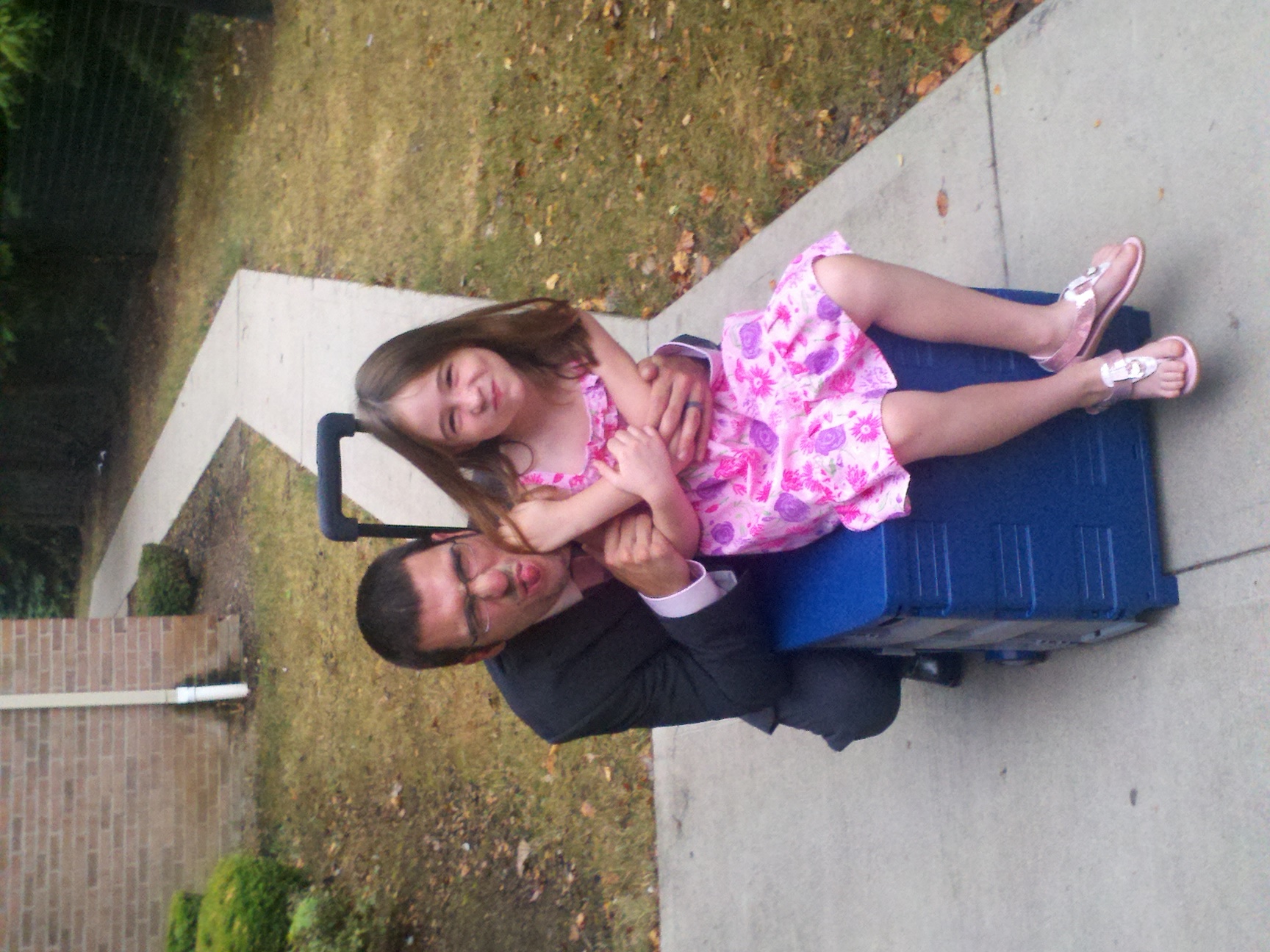
Pull up a chair
If you were sitting at my kitchen table, I’d ask what your kid is like. What makes them laugh? What do you miss hearing them say? I’d give a hell of a lot to ask Haley what she did at school and hear her say “nothing.” I miss the boring stuff.
Maybe today is your kid’s birthday. Maybe it’s just Tuesday and you miss them. Mom or dad, I’m glad you found your way here. Take whatever you need today.
The Last Time I Saw Haley
The last time I saw my daughter, she was six. She started to leave without even giving me a hug. Her mom had to tell her to give me one. Then Haley walked off calling another man “Dad.” I was standing right there.
Her mom was right there, too. She knew damn well who Haley’s dad was. To me, lying to her own daughter like that was sick and twisted. How do you do that to your own kid? She set Haley up to count on a man who couldn’t even look me in the eye.
On that visit she wrote in chalk on the sidewalk in front of my place. I remember her writing his name before mine. Look down near the hearts and you can see where she wrote “daddy.” That was me.
As I understand it, that man later walked out of her life. I call that cowardice. I can still hear Haley calling him Dad as she walked away from me. She was six. None of that was hers to carry.
The summer my truck caught fire
Swipe to browse. Tap to enlarge.

Open the full photo
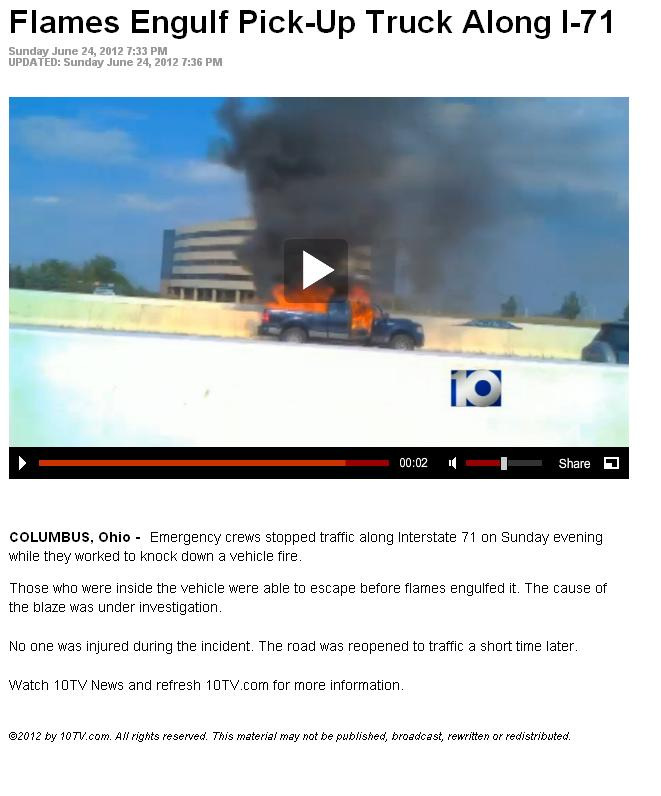
· Read the full clipping (PDF)

Open the full photo

Open the full photo
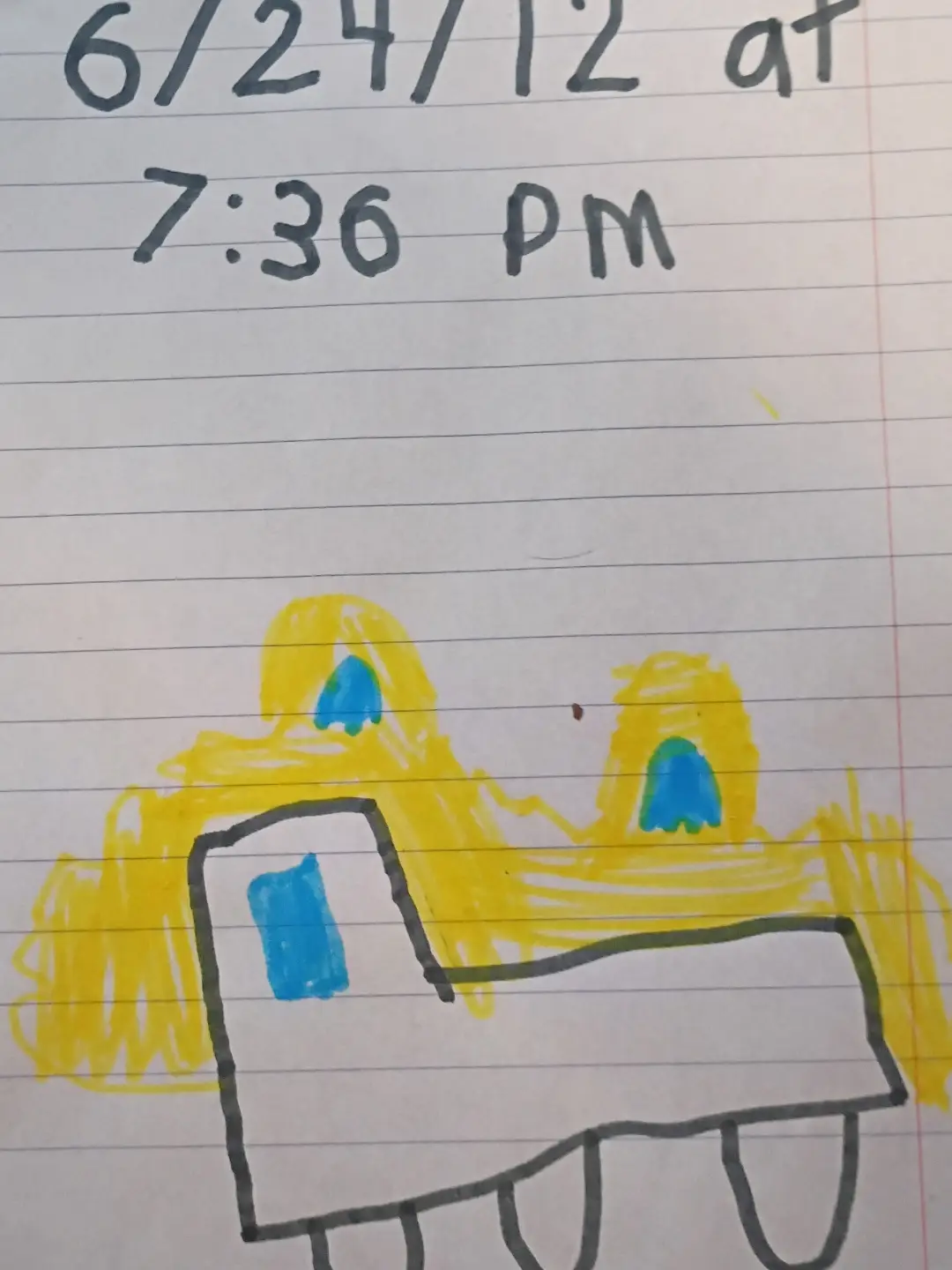
Open the full drawing
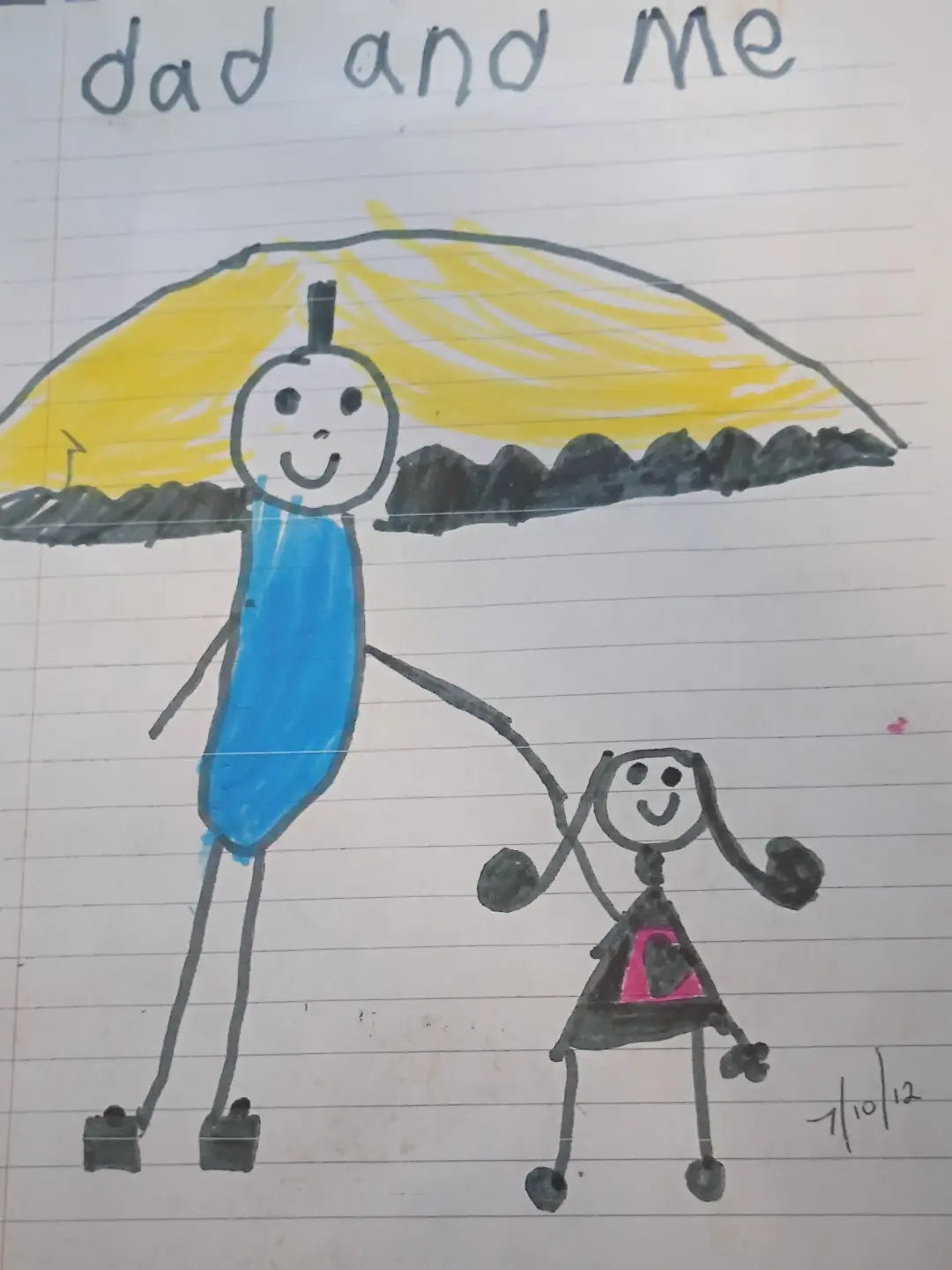
Open the full drawing
On June 24, 2012, my black Ford F-150 STX caught fire on I-71 in Columbus. I saved my daughter from a burning truck. She was six. Here’s the truck before and after the fire, and what Haley drew.
What does this do to a parent?
Is this a midlife crisis?
I’m 45. Haley is 20. The girl in that chalk photo is six. When I think about getting older, those are the years I count. I wonder what made her laugh at twelve. I wonder what I’d have said the first time she handed me the car keys back. That’s a hell of a lot to miss.
In a survey of 724 people, most of those who said they’d had a midlife crisis traced it to a major event in their lives. The study asked about midlife generally. If the words that fit you better are “I miss my kid,” that’s plenty to start a conversation. Here’s what you can say when you call.
Read Elaine Wethington’s study of what people mean by “midlife crisis” (PDF)
Grieving somebody who’s still alive
Your kid has a birthday. You know exactly how old they are. You might have no damn idea what they want for their birthday anymore. That’s the part I wish people understood.
Researchers call this kind of uncertainty ambiguous loss. Your child is alive and still part of your life in your head, while their seat at the table is empty. In interviews with mothers who lost time with their children after separation, women described grief that the people around them barely recognized. Even mothers who still had some time with their kids described that pain.
Read Vivienne Elizabeth’s study of mothers who lost parenting time
Sleep, work and the bills that keep coming
In one study, 54 mothers and fathers volunteered to talk about losing contact with a child in circumstances they described as parental alienation. Parents talked about lying awake, struggling to concentrate, pulling away from people and dealing with headaches. Some described losing a job or spending money on court that they needed for everyday life.
Of those 54 parents, 59% described trouble with work or money. That tells me how far this reached into those parents’ lives. The researchers interviewed volunteers. Their numbers can’t tell you the odds for your family or what caused a particular illness.
What if your kid is grown now?
Haley is grown. I still remember her at six. Eighteen is a hell of a number to expect a heart to understand.
A U.S. study followed families over time and looked at 2,609 mothers and 5,590 adult children. Mothers who were estranged from an adult child rated their health more poorly than mothers with warm ties. That’s a link researchers could measure. The study can’t tell us whether losing contact caused any one mother’s health problems, or how fathers would have answered.
What the hell do I say when I call?
To a counselor, try this in your own words.
“I’ve lost contact with my child. It’s affecting my sleep and my work. Do you have somebody who understands this kind of grief? What would a visit cost me? Do you charge less if money’s tight?”
If the person you need today is a friend, you can go shorter.
“It’s my kid’s birthday. Can you call me after work? I could use the company.”
If you’re the friend reading this, ask what their kid is like. Give them time to tell the long version. Then call again next week.
Help in your state
Choose where you live for mental health services and local groups through the National Alliance on Mental Illness (NAMI). If your case is in another state, use that state for court help.
Alabama
Alaska
Arizona
Arkansas
California
Colorado
Connecticut
Delaware
District of Columbia
Florida
Georgia
Hawaii
Idaho
Illinois
Indiana
Iowa
Kansas
Kentucky
Louisiana
Maine
Maryland
Massachusetts
Michigan
Minnesota
Mississippi
Missouri
Montana
Nebraska
Nevada
New Hampshire
New Jersey
New Mexico
New York
North Carolina
North Dakota
Ohio
Oklahoma
Oregon
Pennsylvania
Rhode Island
South Carolina
South Dakota
Tennessee
Texas
Utah
Vermont
Virginia
Washington
West Virginia
Wisconsin
Need a clinic you can afford? Search by ZIP code and payment options. FindTreatment.gov
If you’re in emotional crisis and need somebody now, call 988 or text 988 to reach the U.S. Suicide & Crisis Lifeline.
Research and references
- ‘It’s an invisible wound’Vivienne Elizabeth · Journal of Social Welfare and Family Law, 2019 · 19 pages (34–52).
- Targeted Parents Surviving Parental AlienationSaulyn Lee-Maturana, Mandy L. Matthewson and Corinna Dwan · Journal of Child and Family Studies, 2020 · 13 pages (2268–2280).
- How Intergenerational Estrangement Matters for Maternal and Adult Children’s HealthRin Reczek, Mieke Beth Thomeer and Christina Bijou · Journal of Marriage and Family, 2025 · 22 pages (92–113).
- Expecting Stress: Americans and the “Midlife Crisis” (PDF)Elaine Wethington · Motivation and Emotion, 2000 · 19 pages (85–103).